 Image 1 of 1
From Landscape to the Picturesque: English Garden History 1780–1840
1780–1840 is one of the richest transitions in British garden history, from late Capability Brown naturalism into the Picturesque, Regency refinement, and early Victorian eclecticism.
Week 1
Setting the Stage. The Late 18th-Century Landscape Tradition
We explore the final flourish of the 18th-century English landscape garden, where naturalistic vistas and sweeping lawns reflected both art and social prestige. We’ll examine how designers like Capability Brown shaped an idealised nature that paved the way for the Picturesque movement.
Week 2
The Origins of the Picturesque
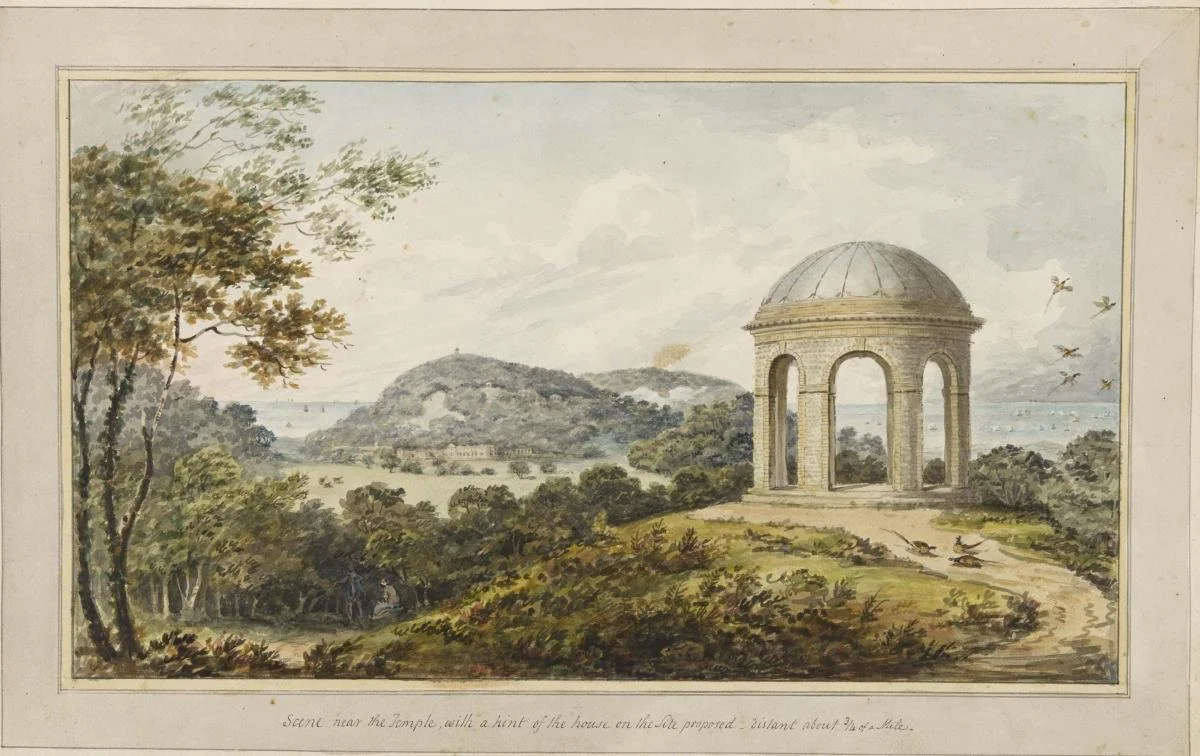
The Picturesque emerged in the late 18th century as a reaction against the rigid formality of earlier garden styles, blending art, nature, and emotion. Inspired by landscape painting and travel experiences, artists like Salvatore Rosa provided the aesthetic inspiration for the movement, a style that intentionally moved away from formal, geometric designs toward more wild, natural, and irregular landscapes. Case studies – Frogmore, Ashridge, the Swiss Garden, Old Warden
Week 3
Uvedale Price and the Critique of Brown
Uvedale Price was a passionate advocate for the Picturesque, arguing that landscapes should embrace variety, roughness, and complexity rather than the smooth, uniform lawns popularised by Capability Brown. He critiqued Brown’s style as overly tame and artificial, championing instead a design approach that celebrated natural irregularity and emotional depth in the landscape.
Week 4
Richard Payne Knight and Aesthetic Theory
Richard Payne Knight (owner of Downton Castle) was not primarily a hands-on gardener or landscape designer in the traditional practical sense. Unlike Humphry Repton or Capability Brown, Knight did not leave behind a large portfolio of actual garden commissions or executed landscape projects. His involvement with gardens was more intellectual and theoretical rather than horticultural or managerial. Knight’s role was more as an aesthetic philosopher and critic, deeply engaged in the ideas behind what made landscapes and gardens beautiful or picturesque, rather than in planting or designing them himself.
Week 5
Humphry Repton, The Mediator?
Repton was the most practical advocate of the Picturesque, transforming estates across England with his Red Books, blending beauty with functionality. His work demonstrates how theory was translated into actual landscapes. Case studies The Duke of Bedford’s Woburn Abbey and Endsleigh, Sheringham Park and Blaise Castle.
Week 6
Travel, Tourism & The Theatrical Landscape- Hawkstone and the Picturesque Experience
Rise of domestic tourism as the Grand Tour was disrupted by war with France, travel at home became the easiest option. The Lake District becomes fashionable thanks in part to William Gilpin (and don’t forget your all new guidebook as they become de rigueur).
Week 7 – The Regency Garden (1811–1820)
Regency gardens, shaped by George IV’s taste and John Nash’s designs, combined exotic ornamentation with theatrical landscaping, often blending (stealing?) Humphry Repton’s garden principles. The Royal Pavilion exemplifies this fusion of architecture, terraces, and imaginative planting.We will also look at exoticism and chinoiserie in gardens and Regency villas.
Week 8
Gardenesque and Early Victorian Shifts
John Claudius Loudon his publications and his ideas on showcasing individual plants, which he called the Gardenesque (also it's far reaching influence in Australia). Jane Loudon, largely overlooked author and illustrator, her work helped to promote gardening and horticulture among middle-class women of her day. We will also look at exotic plant introduction and their display.
Week 9
Empire, Botany, and Global Exchange
This is the era of plant hunting and plant hunters, who were they, who paid them and what did they find? Looking at colonial networks and how imperial expansion reshaped British gardens. In 1840 Kew Gardens opened to the public (but only at midday). Kew was not just a garden, it was a central hub for plant collection from around the globe. Agents and plant hunters were sent to colonies and foreign lands to gather specimens, sometimes legally, sometimes not. Examples include the breadfruit from Tahiti, that was moved to the Caribbean to feed the enslaved people. Tea from China, which eventually helped Britain dominate tea production in India and Sri Lanka. These are examples of plants as commodities, not just curiosities and Kew became a tool for economic and strategic domination. Was Kew involved in biopiracy and theft?
Week 10
1840: The End of an Era?
How did the Italianate revival come back to English gardens? A move back towards formalism with the work of designers like William Andrews Nesfield with the case study of Charles Barry’s 1840 work at Trentham Gardens. This is also the year of the first public park opening in England in Derby with it's arboretum
Information
£250.00
10 WEEK ONLINE COURSE.
1.5 hours a week
Our online Zoom course will begin on Thursday, 7th May.
6 pm-7.30 pm GMT.
All Zoom sessions are recorded and notes are sent out after each class.
PLEASE NOTE:
ONCE YOU HAVE CLICKED ON BOOK NOW AND ADDED IS DISPLAYED PLEASE CLICK ON YOUR CART ICON AT THE TOP OF THE PAGE TO ADD YOUR DETAILS AND CONFIRM YOUR BOOKING.
1780–1840 is one of the richest transitions in British garden history, from late Capability Brown naturalism into the Picturesque, Regency refinement, and early Victorian eclecticism.
Week 1
Setting the Stage. The Late 18th-Century Landscape Tradition
We explore the final flourish of the 18th-century English landscape garden, where naturalistic vistas and sweeping lawns reflected both art and social prestige. We’ll examine how designers like Capability Brown shaped an idealised nature that paved the way for the Picturesque movement.
Week 2
The Origins of the Picturesque
The Picturesque emerged in the late 18th century as a reaction against the rigid formality of earlier garden styles, blending art, nature, and emotion. Inspired by landscape painting and travel experiences, artists like Salvatore Rosa provided the aesthetic inspiration for the movement, a style that intentionally moved away from formal, geometric designs toward more wild, natural, and irregular landscapes. Case studies – Frogmore, Ashridge, the Swiss Garden, Old Warden
Week 3
Uvedale Price and the Critique of Brown
Uvedale Price was a passionate advocate for the Picturesque, arguing that landscapes should embrace variety, roughness, and complexity rather than the smooth, uniform lawns popularised by Capability Brown. He critiqued Brown’s style as overly tame and artificial, championing instead a design approach that celebrated natural irregularity and emotional depth in the landscape.
Week 4
Richard Payne Knight and Aesthetic Theory
Richard Payne Knight (owner of Downton Castle) was not primarily a hands-on gardener or landscape designer in the traditional practical sense. Unlike Humphry Repton or Capability Brown, Knight did not leave behind a large portfolio of actual garden commissions or executed landscape projects. His involvement with gardens was more intellectual and theoretical rather than horticultural or managerial. Knight’s role was more as an aesthetic philosopher and critic, deeply engaged in the ideas behind what made landscapes and gardens beautiful or picturesque, rather than in planting or designing them himself.
Week 5
Humphry Repton, The Mediator?
Repton was the most practical advocate of the Picturesque, transforming estates across England with his Red Books, blending beauty with functionality. His work demonstrates how theory was translated into actual landscapes. Case studies The Duke of Bedford’s Woburn Abbey and Endsleigh, Sheringham Park and Blaise Castle.
Week 6
Travel, Tourism & The Theatrical Landscape- Hawkstone and the Picturesque Experience
Rise of domestic tourism as the Grand Tour was disrupted by war with France, travel at home became the easiest option. The Lake District becomes fashionable thanks in part to William Gilpin (and don’t forget your all new guidebook as they become de rigueur).
Week 7 – The Regency Garden (1811–1820)
Regency gardens, shaped by George IV’s taste and John Nash’s designs, combined exotic ornamentation with theatrical landscaping, often blending (stealing?) Humphry Repton’s garden principles. The Royal Pavilion exemplifies this fusion of architecture, terraces, and imaginative planting.We will also look at exoticism and chinoiserie in gardens and Regency villas.
Week 8
Gardenesque and Early Victorian Shifts
John Claudius Loudon his publications and his ideas on showcasing individual plants, which he called the Gardenesque (also it's far reaching influence in Australia). Jane Loudon, largely overlooked author and illustrator, her work helped to promote gardening and horticulture among middle-class women of her day. We will also look at exotic plant introduction and their display.
Week 9
Empire, Botany, and Global Exchange
This is the era of plant hunting and plant hunters, who were they, who paid them and what did they find? Looking at colonial networks and how imperial expansion reshaped British gardens. In 1840 Kew Gardens opened to the public (but only at midday). Kew was not just a garden, it was a central hub for plant collection from around the globe. Agents and plant hunters were sent to colonies and foreign lands to gather specimens, sometimes legally, sometimes not. Examples include the breadfruit from Tahiti, that was moved to the Caribbean to feed the enslaved people. Tea from China, which eventually helped Britain dominate tea production in India and Sri Lanka. These are examples of plants as commodities, not just curiosities and Kew became a tool for economic and strategic domination. Was Kew involved in biopiracy and theft?
Week 10
1840: The End of an Era?
How did the Italianate revival come back to English gardens? A move back towards formalism with the work of designers like William Andrews Nesfield with the case study of Charles Barry’s 1840 work at Trentham Gardens. This is also the year of the first public park opening in England in Derby with it's arboretum
Information
£250.00
10 WEEK ONLINE COURSE.
1.5 hours a week
Our online Zoom course will begin on Thursday, 7th May.
6 pm-7.30 pm GMT.
All Zoom sessions are recorded and notes are sent out after each class.
PLEASE NOTE:
ONCE YOU HAVE CLICKED ON BOOK NOW AND ADDED IS DISPLAYED PLEASE CLICK ON YOUR CART ICON AT THE TOP OF THE PAGE TO ADD YOUR DETAILS AND CONFIRM YOUR BOOKING.