
 Image 1 of 1
Garden Architecture on the Pincian and Quirinal Hills (1500–1700)
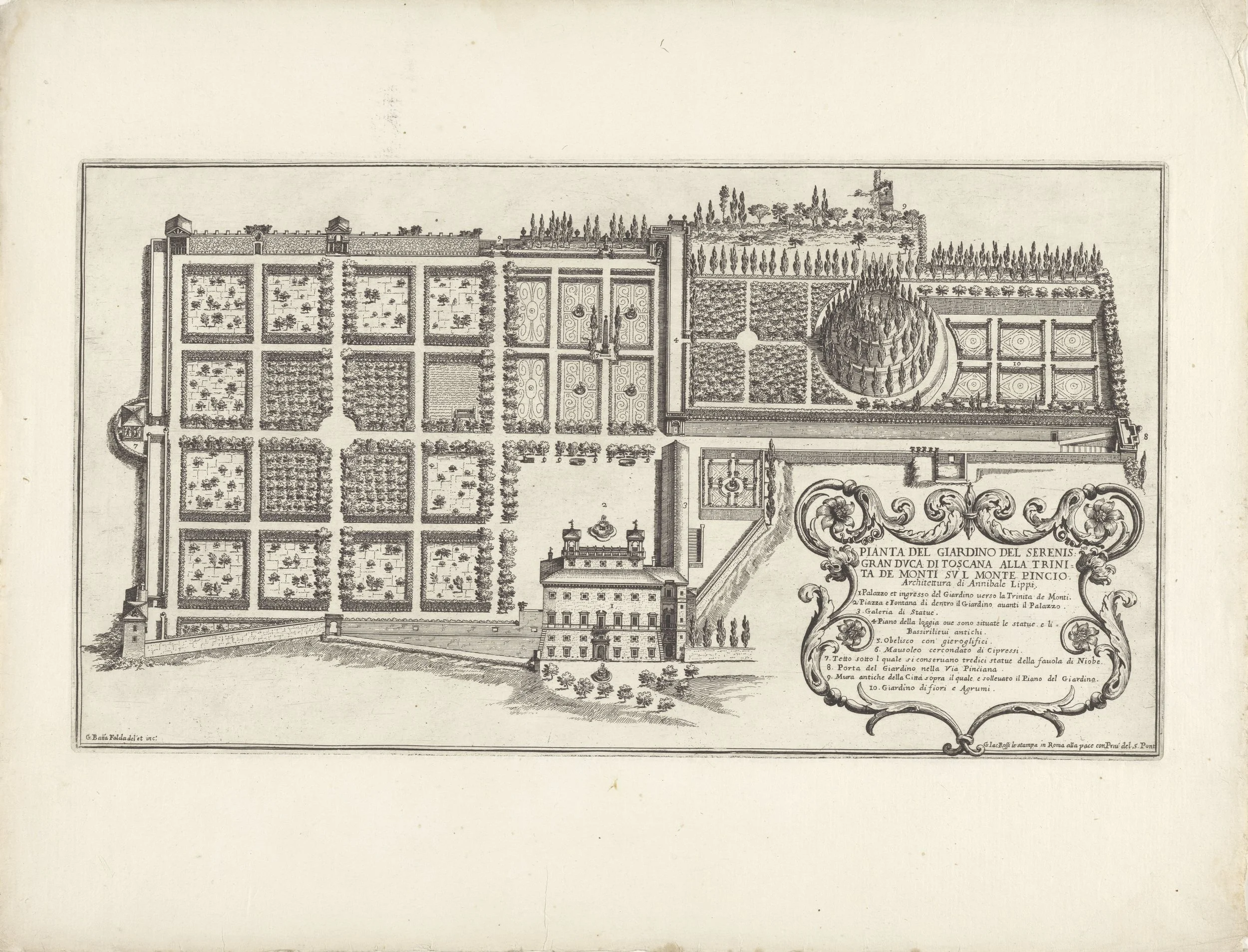
During the sixteenth and seventeenth centuries, Rome’s northern hills served as a training ground for some of the most remarkable garden designers and engineers of European landscape architecture. We will examine how papal patrons, cardinals, and leading architects transformed the topography and classical ruins of the Pincian and Quirinal Hills and beyond the Aurelian Walls, into sophisticated expressions of political authority, antiquarian expertise, and above all a delicious spectacle.
The Mannerist nymphaeum of Villa Giulia and the sculptural courtyard of Palazzo Altemps lead us to the theatrical mythical Mount Parnassus of Villa Medici, then to the highest hill in Rome to find another Medici garden at the Palazzo del Quirinale, culminating in the expansive, semi-public estate of Villa Borghese, where formal Renaissance compartments converged with early naturalistic parkland.